
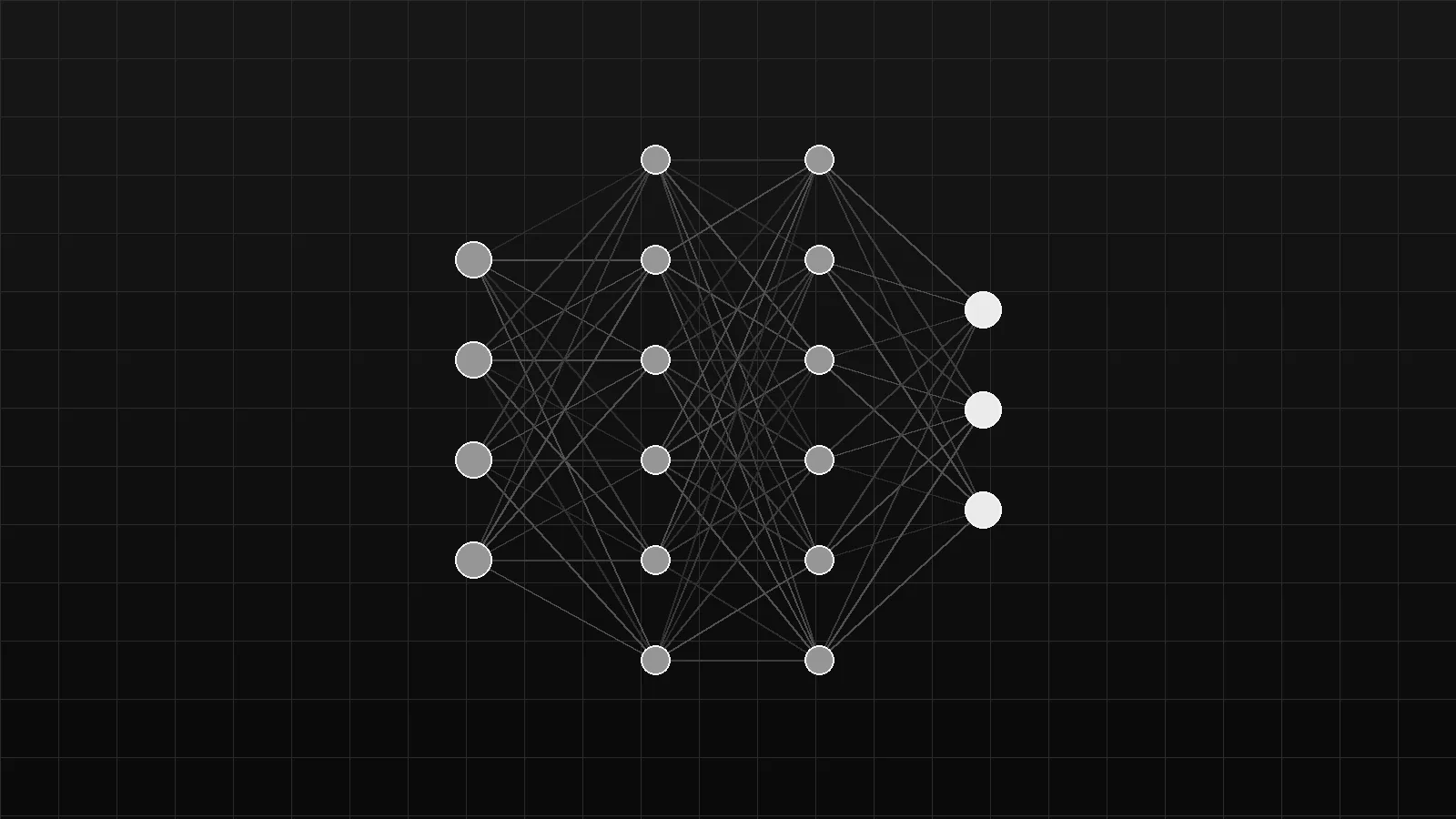
AI & Machine Learning
How to add AI to your product without the hype
A practical framework for choosing AI features that users actually value — and shipping them reliably, safely and on budget.
Noeal Rajeev Thaleeparambil · 6 min read
Services · 01
Designing and shipping practical AI: assistants, automation, computer vision and machine learning models integrated into your products and workflows.
Overview
We build AI features people actually use: assistants that answer from your own data, automation that removes repetitive work, and models that see, classify and predict.
Every engagement starts with the problem, not the model. We prototype quickly against real data, measure quality before launch, and ship with the monitoring, guardrails and cost controls production AI needs.
What we deliver
Chat and copilot experiences grounded in your documents, products and policies, with citations and safe fallbacks.
Ingestion, chunking, embeddings and vector search tuned for answer quality, kept fresh as your content changes.
Multi-step workflows that call your tools and APIs, with human approval where the stakes are high.
Classification, forecasting and recommendation models trained, evaluated and served behind fast APIs.
Detection, recognition and tracking from cameras and images, from cloud inference to on-device models.
Test sets, quality metrics, monitoring and cost tracking so the system keeps improving after launch.
Use cases
Technology
We choose tools for your constraints, not habit. If your team already has a stack, we work within it.
Related work
RevWiki is an intelligent automotive platform that BreaktroughF1 designed and built for the RevWiki team, helping people discover, evaluate and maintain vehicles. It merges AI-powered insights, verified owner data, and a vibrant community of enthusiasts to deliver transparent, data-driven automotive intelligence. From car comparisons and performance analytics to maintenance forecasts and genuine part sourcing, RevWiki serves as the digital backbone for modern vehicle ownership and discovery.
Read case study
CodeBreak is an innovative learning platform designed for hands-on coding projects. It offers structured roadmap, essential skills training, and chatbot-assisted guidance to help developers build real-world projects with confidence.
Read case study
UniView is an advanced AR/VR-based campus navigation system designed to enhance the way students, faculty, and visitors explore educational institutions. It offers real-time directions, immersive 3D views of the campus, and interactive details about key locations, making navigation effortless and engaging.
Read case studyHow we work
Discover
We learn your business, users and constraints before a line of code.
Design
Flows, interfaces and architecture shaped and validated with you.
Build
Iterative delivery with regular demos, reviews and clear milestones.
Support
Launch, monitoring and ongoing improvements once you're live.
Most products should start with retrieval-augmented generation: it keeps answers grounded in your current data and is cheaper to change. Fine-tuning helps when you need a consistent style or format, or a smaller, faster model. We often combine both.
No. We use providers and settings that exclude your data from training, and can run open-weight models in your own cloud when data must not leave your infrastructure.
We build an evaluation set from real examples before writing features, then track accuracy, refusal rate, latency and cost on every change. Launch happens when those numbers meet the targets we agreed with you.
Typically two to four weeks to a working prototype on your data, with a clear go or no-go recommendation and an estimate for production.
From the blog
A practical framework for choosing AI features that users actually value — and shipping them reliably, safely and on budget.
Retrieval-augmented generation and fine-tuning solve different problems. Here's how to tell which one your product needs.
Contact
Join us in pushing the boundaries of what’s possible. Tell us what you’re building and we’ll take it from there.